



Building With Hope & Faith
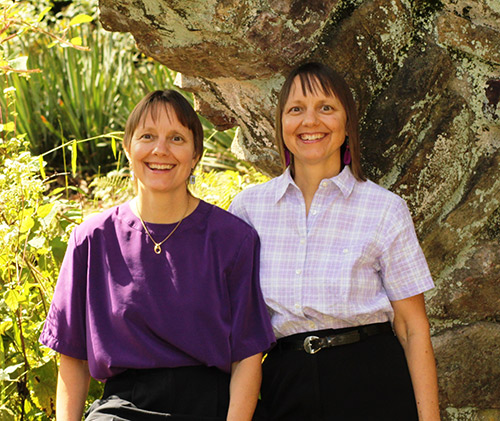
Twin sisters Faith and Hope Zimmerman have been successfully running their Architecture firm since 1991. Having grown up in Morris County, they chose Denville as the location for Zimmerman Architects, where they are practicing in a field they both still love.
 BACKGROUND / EDUCATION
While Faith and Hope both received their Architecture degrees from the New Jersey Institute of Technology, their initial career paths were vastly different. Faith started out at Rutgers’ College of Engineering, but found that field was too cut and dried, while enjoying the art electives. Hope, meanwhile, received a BA in fine arts from Rutgers University but decided she wanted to do something that also exercised her strong math and technical skills. So, the twin sisters found themselves in the same school pursuing identical careers. Architecture is the melding of the two interests they had pursued independently. With Architecture they could join their strong math abilities with their creative talents.
EXPERIENCE
Running their own Architecture practice is as rewarding as it is challenging. The Zimmermans have more than 30 years experience in the architectural profession and have been involved in a diverse range of projects. They have worked on Residential, Commercial, Institutional and Industrial projects of various scopes and sizes. Their services have included all phases of a project including pre-design, zoning analysis, design, design development, construction documents preparation, coordination with consultants and construction administration.
WOMEN IN ARCHITECTURE
Although men dominate the field of Architecture (and the construction industry as a whole), the Zimmermans are not intimidated. In fact, they think being women gives them certain advantages. Being good listeners allows them to get a better feel for what their clients really want. They love that their clients come away from their experience totally satisfied with their project and with the service they received. It is important to them that their clients love the journey as well as their awesome “new” homes.
RESIDENTIAL BY CHOICE
Many years ago, they made a studied decision to concentrate on custom residential projects. The Zimmermans realized that with residential work, the clients put their hearts into the project as much as the Zimmermans do.
CREDENTIALS
- Members of the American Institute of Architects (AIA)
- BArch degrees from The School of Architecture at New Jersey Institute of Technology
- Graduated first & second in class
- Licensed in New Jersey, New York, Pennsylvania & Utah (While most of our work is in Northern New Jersey, we’ve also done projects as far as Canada, Missouri & on Long Beach Island.)
- BA in Fine Arts from Rutgers University
AWARDS
- “Distinguished Women’s Recognition” – awarded by Project Self-Sufficiency.
Project Self-Sufficiency is a private non-profit community based organization whose mission is to assist low-income families in becoming economically self-sufficient. Ms. Zimmerman was honored for her “contribution to the lives of women”. - “Pinnacle of Achievement” – awarded by NJ Association of Women Business Owners for outstanding service.
- “Leading Women Entrepreneurs & Business Owners” – awarded by New Jersey Monthly.
- “Volunteer of the Year” – awarded by the Denville Chamber of Commerce in recognition of “outstanding service and significant contributions to the Denville community”.
- State of New Jersey – Senate and General Assembly, Joint Legislative Resolution – honors bestowed upon Faith and Hope Zimmerman (and Zimmerman Architects) for more than two decades of improving the effectiveness of their communities and the quality of life for their neighbors.
PUBLICATIONS
- NEW JERSEY MONTHLY – March 2000
Zimmerman Architects transformed a tiny converted summer bungalow to an elegant (but modest) 2-story house. - Waterfront Homes, by E. Ashley Rooney, 2004.
Nationally distributed coffee table picture book on waterfront homes featuring one of Zimmerman Architects projects, a new lakefront home on Lake Hopatcong.
(See Project on New Construction Gallery.) - REAL MORRIS MAGAZINE – May 2008
Green design principles to modify and enlarge a 115 year old farmhouse.
(See Project on Renovations Gallery.) - Morris County NOW “New Directions for Women” TV Series – July 2010
Women Architects: Building A Greener World
A discussion with Faith and Hope Zimmerman on building architecture and sustainably “green” design.
“Good design is both inspired and practical”
GREEN DESIGN
- Green design principles rather than just green materials.
- Adaptive reuse. Renovate and possibly add onto, rather than knock down, put in a landfill and replace with new. (This of course assumes that the original structure was well built and has “good bones”. Sometimes a structurally deficient structure should be removed rather than remediated.) Updating an old house to current living standards makes it less likely to be torn down in the future.
- Natural ventilation. Use of venting skylights or high clerestory windows, in conjunction with ceiling fans, reduces the need for air conditioning. Also allows air conditioning to be set at higher temperatures while maintaining same comfort level.
- Natural daylighting. Both window location & configuration, and roof overhangs need to be carefully considered, based on many factors including sun orientation and desired light levels in each space at various times of day & for different seasons.
- New construction sited to take advantage of all the natural features of the site…view, need for privacy, southern exposure, slope of the land, neighborhood context.
- Renovation work also considers these issues, but often has the added challenge of a poorly sited original house.
Great design isn’t necessarily about size. It’s about smart use of space as well as the right products to do the job. We all need to live smarter without necessarily living larger.
WOW FACTOR
- Light filled spaces. Play of light on the surfaces.
- Sense of the house, its personality, upon entering, but still reveals itself as you proceed. Surprises. Gems.
- Sculptural elements, viewed from various vantage points both inside & outside the house. Focal points within larger context.
- Interior/exterior interplay.
- Interesting massing, but not just random forms. Repeated elements (sometimes modified), both interior and exterior to unify the project. The repetition of elements used to marry the interior and exterior.
- Interconnections (both visual and physical) between the various functions and spaces. Varying degrees of separation and connection. Separate and connect simultaneously.
- Smaller, more intimate private places within larger public spaces. Soaring spaces & intimate places. Comfortable “people places”.
- Practical yet fanciful.
- Craftsmanship and detailing.
HOW WE’RE DIFFERENT
We’ve flipped the script. We believe the secret to amazing architecture isn’t in prescribing trendy solutions – it’s in listening deeply and asking precisely the right questions. Our process is designed specifically to help you uncover and clarify what you truly want, even if you can’t fully picture or explain it yet.
There’s a good chance you have felt the frustration of having a clear picture in your mind of how you want your space to look and feel, yet struggle to describe it. Often, when people approach an architect, they find themselves trying to articulate ideas they’re not completely clear on themselves. Or they only know a little of what they want, and perhaps a lot more of what they don’t want.
Many architects are eager to jump into trends, suggesting designs that match the “modern standard” or what they assume you should have, rather than truly listening to you. The result? Spaces that might look nice but don’t truly reflect your vision, your needs, or your personality.
We don’t rush you or assume we already know what’s best. Instead, we guide you gently but intentionally through a detailed exploration. We listen actively, ask thoughtful, strategic questions, and provide vivid examples to help you visualize possibilities. Together, we shape your ideas into a clear and inspiring vision.
By the time we deliver your design drawings, you’ll see your vision come to life. And even then, you’ll have opportunities to refine it further, ensuring every detail resonates with you. We love that our clients tell us that the final outcome isn’t just exactly what they’d hoped for – it’s way better than they ever imagined possible.
The difference isn’t just how we listen – it’s how deeply we care about turning your fuzzy idea into something truly extraordinary.
WHY OUR PROCESS WORKS SO WELL
The magic behind our results is a uniquely hands-on, high-touch process structured into three seamless phases. Each phase builds upon the last, creating clarity, confidence, and unmatched quality every step of the way.
PHASE 1: DISCOVERY & DESIGN
In this foundational phase, we dive deep to fully understand your goals, preferences, and the potential of your existing space. Whether it’s a renovation or addition, we meticulously measure and analyze your home. We do a Zoning Analysis and evaluate site specifics. Through intimate conversations and detailed design sketches drawn to scale, we collaboratively refine ideas until you’re completely confident and excited about the results.
PHASE 2: CONSTRUCTION DOCUMENTS
Once we have a design you absolutely love, we translate it into precise, detailed construction documents that builders use to bring your ideas to life. These comprehensive plans include everything required for accurate contractor bids, permit applications, and smooth construction. The Construction Drawings, along with the Project Manual, explain the construction details, the exterior and interior finishes, material selections and clear specifications. Every element is thoughtfully detailed, leaving nothing to guesswork.
PHASE 3: IMPLEMENTATION & SUPPORT
Our involvement doesn’t end with design. We facilitate contractor bids, and arrange pre-construction walkthroughs. We remain fully involved throughout construction, coordinating with kitchen and bath designers, interior designers, landscape architects, and other specialists. Through regular site visits, we work closely with you and your contractor, address proposed changes during construction and help to resolve any challenges. We stay actively involved until the final walkthrough.
This thorough, personalized support is what guarantees not just an awesome project – but a fun and enjoyable experience from start to finish.
Attention to detail, patience, sensitivity to materials, perfectionism. These are all evident in the work of a craftsman, someone highly skilled in his or her trade. An artisan.
We always want our projects to embody high quality craftsmanship. As architects, we have limited control over those who will be building them. They are not working for us, and are not always of our choosing. Our drawings can prescribe certain finish qualities and can even require that the contractor have specific certifications or training, but they can’t require caring & sensitivity – perfectionism.
Our drawings are the medium through which we communicate to others, how a project is to be built. They are created with same level of craftsmanship and care that we expect the builder to employ in his or her work. Every line represents something, is intentional. The drawings are carefully organized for clarity. The lineweight to “make it read”, the arrangement and content of text, the alignment, groupings of information, arrangement of dimensions, leader lines, are all carefully considered to make the drawings more legible and easily understood. However, this is not tedious nor overly time consuming because it is done as a matter of habit.
Craftsmanship is part skill and part attitude. Work can be done haphazardly, or carefully. We can affect the attitude on the job site with our drawings. They set a standard of good work and caring. Once this attitude has been established, those who follow are more likely to follow this lead, not wanting to be the careless one.
So aside from the joy of craftsmanship that we feel when we “draw”, there is another higher purpose: we use our drawings to set the tone for a job, to show clearly that we value craftsmanship, that we too are craftsmen. We use them to convey that craftsmanship is an integral part of the project. We never have to state this. Our drawings by themselves communicate whether or not we care about what we are doing. Also, builders pay more attention to drawings that are prepared craftfully, and when they pay attention, they will build what is drawn.
Just as we notice the care with which a finish carpenter works, the finish carpenter notices the care with which we produce our drawings. The drawings convey that we have a mastery of our craft, as well as a mastery of the project. The builder and architect should work as a team, with mutual respect and professionalism, with concern for project quality.
The manner in which we present our work affects the work of others. The art of craftsmanship embodies all that we do.
(The ideas expressed here are a synopsis of an article, The Art of Craftsmanship, written by Donald Wardlaw AIA, published by The American Institute of Architects. We embraced the ideas put forth in the piece so whole-heartedly that the entire article is required reading for all new employees.)
BACKGROUND / EDUCATION
While Faith and Hope both received their Architecture degrees from the New Jersey Institute of Technology, their initial career paths were vastly different. Faith started out at Rutgers’ College of Engineering, but found that field was too cut and dried, while enjoying the art electives. Hope, meanwhile, received a BA in fine arts from Rutgers University but decided she wanted to do something that also exercised her strong math and technical skills. So, the twin sisters found themselves in the same school pursuing identical careers. Architecture is the melding of the two interests they had pursued independently. With Architecture they could join their strong math abilities with their creative talents.
EXPERIENCE
Running their own Architecture practice is as rewarding as it is challenging. The Zimmermans have more than 30 years experience in the architectural profession and have been involved in a diverse range of projects. They have worked on Residential, Commercial, Institutional and Industrial projects of various scopes and sizes. Their services have included all phases of a project including pre-design, zoning analysis, design, design development, construction documents preparation, coordination with consultants and construction administration.
WOMEN IN ARCHITECTURE
Although men dominate the field of Architecture (and the construction industry as a whole), the Zimmermans are not intimidated. In fact, they think being women gives them certain advantages. Being good listeners allows them to get a better feel for what their clients really want. They love that their clients come away from their experience totally satisfied with their project and with the service they received. It is important to them that their clients love the journey as well as their awesome “new” homes.
RESIDENTIAL BY CHOICE
Many years ago, they made a studied decision to concentrate on custom residential projects. The Zimmermans realized that with residential work, the clients put their hearts into the project as much as the Zimmermans do.
CREDENTIALS
- Members of the American Institute of Architects (AIA)
- BArch degrees from The School of Architecture at New Jersey Institute of Technology
- Graduated first & second in class
- Licensed in New Jersey, New York, Pennsylvania & Utah (While most of our work is in Northern New Jersey, we’ve also done projects as far as Canada, Missouri & on Long Beach Island.)
- BA in Fine Arts from Rutgers University
AWARDS
- “Distinguished Women’s Recognition” – awarded by Project Self-Sufficiency.
Project Self-Sufficiency is a private non-profit community based organization whose mission is to assist low-income families in becoming economically self-sufficient. Ms. Zimmerman was honored for her “contribution to the lives of women”. - “Pinnacle of Achievement” – awarded by NJ Association of Women Business Owners for outstanding service.
- “Leading Women Entrepreneurs & Business Owners” – awarded by New Jersey Monthly.
- “Volunteer of the Year” – awarded by the Denville Chamber of Commerce in recognition of “outstanding service and significant contributions to the Denville community”.
- State of New Jersey – Senate and General Assembly, Joint Legislative Resolution – honors bestowed upon Faith and Hope Zimmerman (and Zimmerman Architects) for more than two decades of improving the effectiveness of their communities and the quality of life for their neighbors.
PUBLICATIONS
- NEW JERSEY MONTHLY – March 2000
Zimmerman Architects transformed a tiny converted summer bungalow to an elegant (but modest) 2-story house. - Waterfront Homes, by E. Ashley Rooney, 2004.
Nationally distributed coffee table picture book on waterfront homes featuring one of Zimmerman Architects projects, a new lakefront home on Lake Hopatcong.
(See Project B on New Construction Gallery.) - REAL MORRIS MAGAZINE – May 2008
Green design principles to modify and enlarge a 115 year old farmhouse.
(See Project AA on Renovations Gallery.) - Morris County NOW “New Directions for Women” TV Series – July 2010
Women Architects: Building A Greener World
A discussion with Faith and Hope Zimmerman on building architecture and sustainably “green” design.
“Good design is both inspired and practical”
GREEN DESIGN
- Green design principles rather than just green materials.
- Adaptive reuse. Renovate and possibly add onto, rather than knock down, put in a landfill and replace with new. (This of course assumes that the original structure was well built and has “good bones”. Sometimes a structurally deficient structure should be removed rather than remediated.) Updating an old house to current living standards makes it less likely to be torn down in the future.
- Natural ventilation. Use of venting skylights or high clerestory windows, in conjunction with ceiling fans, reduces the need for air conditioning. Also allows air conditioning to be set at higher temperatures while maintaining same comfort level.
- Natural daylighting. Both window location & configuration, and roof overhangs need to be carefully considered, based on many factors including sun orientation and desired light levels in each space at various times of day & for different seasons.
- New construction sited to take advantage of all the natural features of the site…view, need for privacy, southern exposure, slope of the land, neighborhood context.
- Renovation work also considers these issues, but often has the added challenge of a poorly sited original house.
Great design isn’t necessarily about size. It’s about smart use of space as well as the right products to do the job. We all need to live smarter without necessarily living larger.
WOW FACTOR
- Light filled spaces. Play of light on the surfaces.
- Sense of the house, its personality, upon entering, but still reveals itself as you proceed. Surprises. Gems.
- Sculptural elements, viewed from various vantage points both inside & outside the house. Focal points within larger context.
- Interior/exterior interplay.
- Interesting massing, but not just random forms. Repeated elements (sometimes modified), both interior and exterior to unify the project. The repetition of elements used to marry the interior and exterior.
- Interconnections (both visual and physical) between the various functions and spaces. Varying degrees of separation and connection. Separate and connect simultaneously.
- Smaller, more intimate private places within larger public spaces. Soaring spaces & intimate places. Comfortable “people places”.
- Practical yet fanciful.
- Craftsmanship and detailing.
HOW WE’RE DIFFERENT
We’ve flipped the script. We believe the secret to amazing architecture isn’t in prescribing trendy solutions – it’s in listening deeply and asking precisely the right questions. Our process is designed specifically to help you uncover and clarify what you truly want, even if you can’t fully picture or explain it yet.
There’s a good chance you have felt the frustration of having a clear picture in your mind of how you want your space to look and feel, yet struggle to describe it. Often, when people approach an architect, they find themselves trying to articulate ideas they’re not completely clear on themselves. Or they only know a little of what they want, and perhaps a lot more of what they don’t want.
Many architects are eager to jump into trends, suggesting designs that match the “modern standard” or what they assume you should have, rather than truly listening to you. The result? Spaces that might look nice but don’t truly reflect your vision, your needs, or your personality.
We don’t rush you or assume we already know what’s best. Instead, we guide you gently but intentionally through a detailed exploration. We listen actively, ask thoughtful, strategic questions, and provide vivid examples to help you visualize possibilities. Together, we shape your ideas into a clear and inspiring vision.
By the time we deliver your design drawings, you’ll see your vision come to life. And even then, you’ll have opportunities to refine it further, ensuring every detail resonates with you. We love that our clients tell us that the final outcome isn’t just exactly what they’d hoped for – it’s way better than they ever imagined possible.
The difference isn’t just how we listen – it’s how deeply we care about turning your fuzzy idea into something truly extraordinary.
WHY OUR PROCESS WORKS SO WELL
The magic behind our results is a uniquely hands-on, high-touch process structured into three seamless phases. Each phase builds upon the last, creating clarity, confidence, and unmatched quality every step of the way.
PHASE 1: DISCOVERY & DESIGN
In this foundational phase, we dive deep to fully understand your goals, preferences, and the potential of your existing space. Whether it’s a renovation or addition, we meticulously measure and analyze your home. We do a Zoning Analysis and evaluate site specifics. Through intimate conversations and detailed design sketches drawn to scale, we collaboratively refine ideas until you’re completely confident and excited about the results.
PHASE 2: CONSTRUCTION DOCUMENTS
Once we have a design you absolutely love, we translate it into precise, detailed construction documents that builders use to bring your ideas to life. These comprehensive plans include everything required for accurate contractor bids, permit applications, and smooth construction. The Construction Drawings, along with the Project Manual, explain the construction details, the exterior and interior finishes, material selections and clear specifications. Every element is thoughtfully detailed, leaving nothing to guesswork.
PHASE 3: IMPLEMENTATION & SUPPORT
Our involvement doesn’t end with design. We facilitate contractor bids, and arrange pre-construction walkthroughs. We remain fully involved throughout construction, coordinating with kitchen and bath designers, interior designers, landscape architects, and other specialists. Through regular site visits, we work closely with you and your contractor, address proposed changes during construction and help to resolve any challenges. We stay actively involved until the final walkthrough.
This thorough, personalized support is what guarantees not just an awesome project – but a fun and enjoyable experience from start to finish.
Attention to detail, patience, sensitivity to materials, perfectionism. These are all evident in the work of a craftsman, someone highly skilled in his or her trade. An artisan.
We always want our projects to embody high quality craftsmanship. As architects, we have limited control over those who will be building them. They are not working for us, and are not always of our choosing. Our drawings can prescribe certain finish qualities and can even require that the contractor have specific certifications or training, but they can’t require caring & sensitivity – perfectionism.
Our drawings are the medium through which we communicate to others, how a project is to be built. They are created with same level of craftsmanship and care that we expect the builder to employ in his or her work. Every line represents something, is intentional. The drawings are carefully organized for clarity. The lineweight to “make it read”, the arrangement and content of text, the alignment, groupings of information, arrangement of dimensions, leader lines, are all carefully considered to make the drawings more legible and easily understood. However, this is not tedious nor overly time consuming because it is done as a matter of habit.
Craftsmanship is part skill and part attitude. Work can be done haphazardly, or carefully. We can affect the attitude on the job site with our drawings. They set a standard of good work and caring. Once this attitude has been established, those who follow are more likely to follow this lead, not wanting to be the careless one.
So aside from the joy of craftsmanship that we feel when we “draw”, there is another higher purpose: we use our drawings to set the tone for a job, to show clearly that we value craftsmanship, that we too are craftsmen. We use them to convey that craftsmanship is an integral part of the project. We never have to state this. Our drawings by themselves communicate whether or not we care about what we are doing. Also, builders pay more attention to drawings that are prepared craftfully, and when they pay attention, they will build what is drawn.
Just as we notice the care with which a finish carpenter works, the finish carpenter notices the care with which we produce our drawings. The drawings convey that we have a mastery of our craft, as well as a mastery of the project. The builder and architect should work as a team, with mutual respect and professionalism, with concern for project quality.
The manner in which we present our work affects the work of others. The art of craftsmanship embodies all that we do.
(The ideas expressed here are a synopsis of an article, The Art of Craftsmanship, written by Donald Wardlaw AIA, published by The American Institute of Architects. We embraced the ideas put forth in the piece so whole-heartedly that the entire article is required reading for all new employees.)